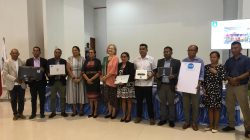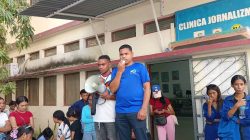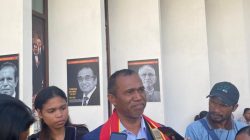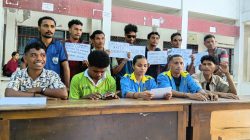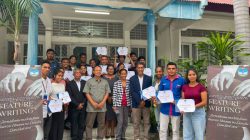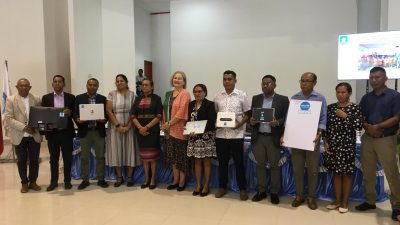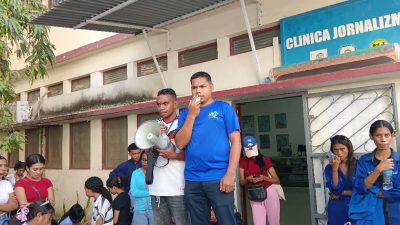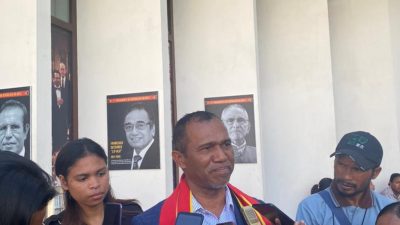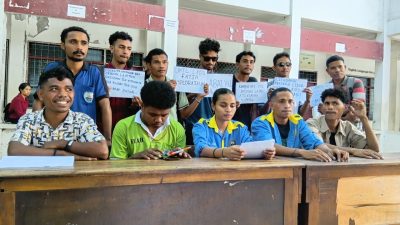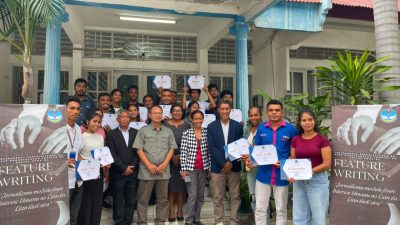



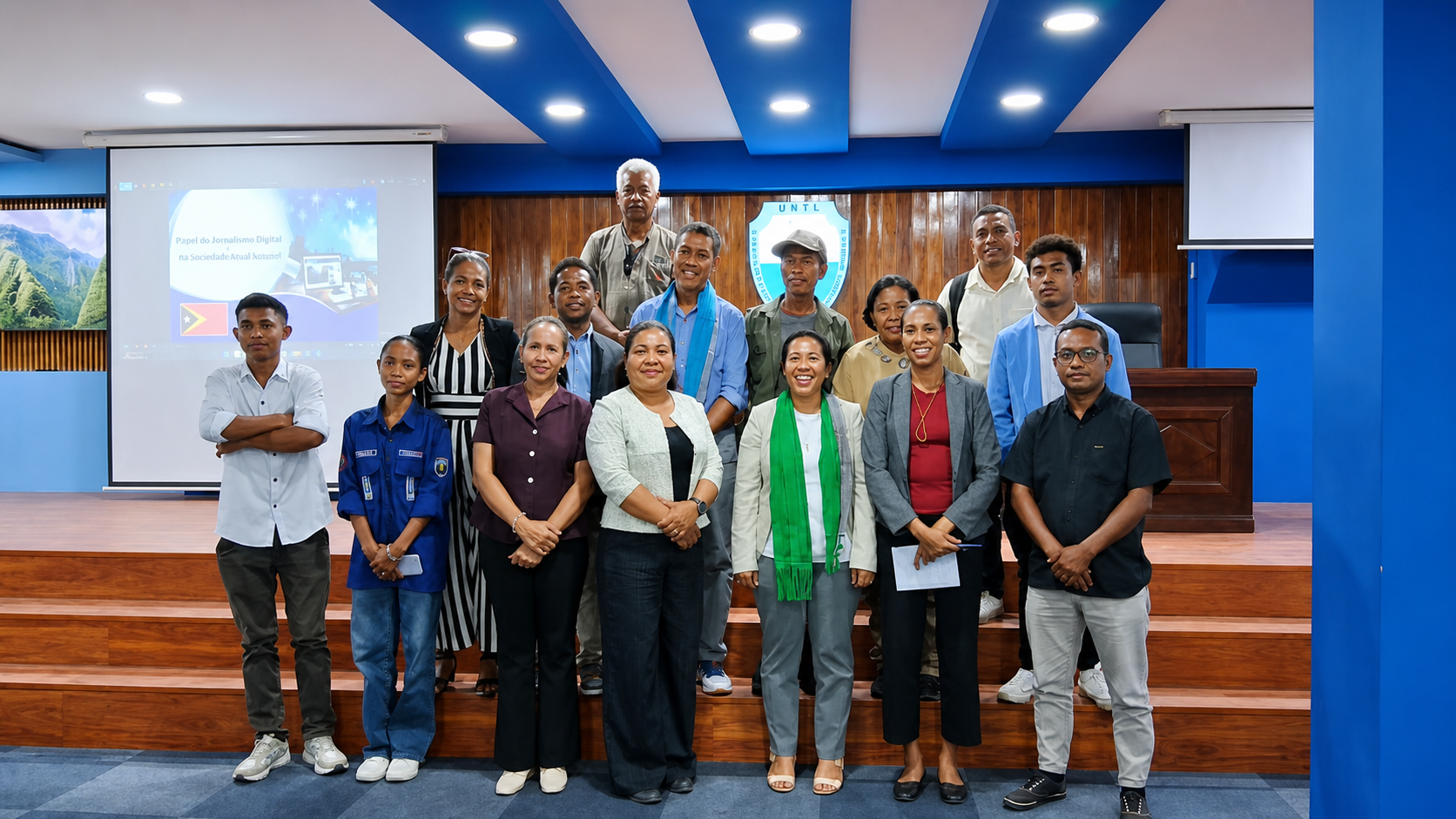
(Díli), Caicoli, 04 May 2026- Department of Social Communications, National University of East Timor (UNTL), held a discussion activity on press freedom, which is considered important for the strengthening of democracy in Timor-Leste. This activity involved students from the Department of Social Communications, with the objective to increase understanding of the rights and responsibilities of the media in society.
According to an active student from the Department of Social Communications, Natividade Sequeria Marques added that this activity is considered important for the strengthening of democracy in Timor-Leste, especially to increase students’ understanding of the rights and responsibilities of the media in society, during the discussion exchanged ideas about the role of journalists to disseminate accurate and responsible information.
“Our Constitution of the RDTL recognizes freedom of expression and freedom of the press in articles 40 and 41, which guarantee freedom of access to information and freedom to express opinion, especially on political and development issues,” said Natividade student Sequeria Marques to Media Mudansa journalist, at the second campus, Merah, Campus.
He also said that all citizens have a responsibility to express their views critically on the situation in the country.
“According to my understanding, what we see and feel, we can express critical thoughts to contribute to the development of the country,” he said.
According to his perspective, freedom of expression and the press in Timor-Leste is undoubted because everyone has the right to express what they feel and without limitation.
“In Timor-Leste there is freedom of expression and press because the opinion of all society, there is no limitation of his opinion,” he added.
On the other hand, Professor Dra. Dulce Martins da Silva explained that the challenges and risks in online media, especially in the context of the digital era where information can spread very quickly. He showed that, through the use of bots and other automated technologies, public opinion can be influenced in subtle but powerful ways, which are sometimes difficult to detect by ordinary users.
“To prevent the misuse of the media as a way to defame, treat each other and vote with others, it is necessary to create a law. The objective is not to close or restrict press freedom, but to promote social communication media to be professional, responsible and respect positive rights and human rights, as enshrined in the International Convention and Convention,” said Draven. Dulce Martins da Silva.
He added that clear and fair regulation will help to create a balance between freedom and responsibility. “Press freedom is very important, but if there is no responsibility, it can turn into a threat to social harmony. Therefore, education and public awareness are also important factors to improve the media ecosystem in Timor-Leste,” he said.Meanwhile, Representative of the Press Council of Timor-Leste (CI) through Director of Media Analysis and Development Directorate (DADM), Alberico da Costa Junior, said, the development of digital technology brings great changes in the way of journalism and disseminate information to the public, especially in urban areas such as Dili.
“Digital online media is now a major platform that facilitates access to information in real time. In Dili, most societies use the internet and social networks such as Facebook, WhatsApp and news websites to receive and share information every day. This condition increases the speed of communication, but also brings challenges regarding credibility and verification of news,” said (DADM), Alberico da Costa Junior at Kampus Merah, Caicoli, Monday.
Director, Alberico da Costa Junior emphasized that, although digital media is easier, journalists must continue to do their job with responsibility, professionalism and according to journalistic ethics. Information must be clear, accurate and verified before publication, to prevent disinformation or fake news that can affect social stability.
“Online media is also considered important in improving societal participation. People can express their opinions, criticize public policy and contribute to transparency of governance. However, the Press Council asks users to use digital media in a responsible manner, respect the law and the rights of others,” he said.
Director of the Directorate of Media Analysis and Development, Alberico da Costa Junior, observed that in Timor-Leste, some media will have a sensationalist and promotional tendency, especially in news headlines that sometimes do not follow journalistic standards. In addition, there are also media that give priority to the interests of specific parties or groups rather than the public interest.
“The media must stand firm to strengthen fair and factual information, in order to contribute to the development of institutions. And not to work with particular interests to gain individual benefits. He concluded.
According to the Constitution of the RDTL, freedom of the press is guaranteed in Articles 40 and 41, which give everyone the right to express their opinion freely. However, this freedom is also limited, especially to protect the honor and reputation of others.
The discussion also gave students the opportunity to understand more about press freedom as an important pillar in a democratic system, which needs to be accompanied by responsibility and respect for the law in force.
The activity ended with an appeal to students to continue developing their critical capacity and practice professional journalism, to contribute to an informed and democratic society.
Journalist : Caryn Camões
Editor : Francisco Pereira