


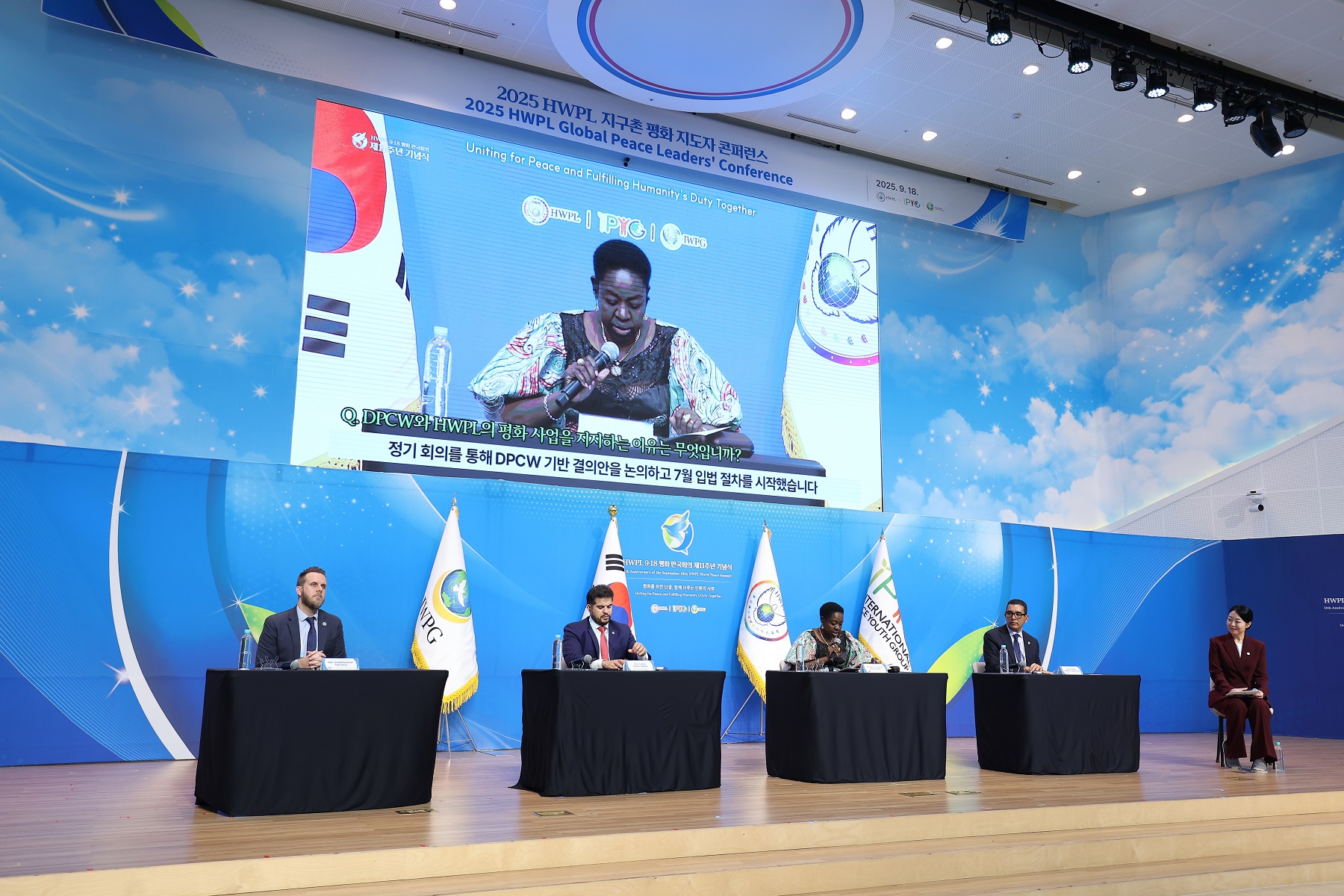
From Political Commitment to Parliamentary Adoption
Since gaining independence in 2011, South Sudan has worked to rebuild its institutions after years of conflict. As part of that effort, the Transitional National Legislative Assembly (TNLA) adopted Resolution No. 29/2025 endorsing the Declaration of Peace and Cessation of War (DPCW), strengthening the country’s legal and institutional framework for peace.
The DPCW, proclaimed by HWPL in 2016, is a framework consisting of 10 articles and 38 clauses that presents principles for preventing conflict, promoting peaceful dispute resolution, strengthening international cooperation, and fostering a culture of peace. It has since served as the basis for dialogue with governments, legal experts, and civil society organizations on institutional approaches to peace.
Unified Support Across the Three Branches of Government
The resolution followed years of engagement, beginning with discussions involving the judiciary, followed by President Salva Kiir Mayardit’s endorsement of the DPCW in 2024, and culminating in Parliament’s adoption in 2025. The process demonstrated support for the DPCW across South Sudan’s presidency, judiciary, and legislature.
A Deliberative Legislative Process
The resolution was considered during the 15th Ordinary Sitting of the TNLA on September 15, 2025, where lawmakers examined both its legal basis and practical implications.
Some lawmakers questioned whether Parliament should endorse a document developed by a South Korean civil society organization rather than an intergovernmental body such as the United Nations (UN) or the African Union (AU), and sought clarification on its legal standing.
In response, Hon. Bona Deng Lawrence, Chairperson of the Standing Committee on Peace and Reconciliation, explained that the Ministries of Foreign Affairs and Justice had completed legal reviews of the DPCW and found no legal obstacles to introducing the resolution.
Following the review, lawmakers agreed that durable peace requires legal and institutional foundations alongside political agreements. Parliament ultimately debated the proposal through its own legislative procedures and adopted the resolution by consensus, reflecting South Sudan’s commitment to advancing peace through its constitutional institutions.
Leaders Behind the Resolution
For Hon. Jemma Nunu Kumba, the first female Speaker of Parliament, peace has always been closely tied to survival. Having experienced displacement during the civil war and later witnessed repeated peace agreements fail, she came to regard the DPCW as a practical framework for supporting lasting peace.
“Government resources by themselves are not enough to implement peace agreements. The DPCW is now an important tool for us. It complements the government’s efforts and provides a practical framework for resettling the many displaced people who must return home.”
— Hon. Jemma Nunu Kumba, Former Speaker of Parliament
For Hon. Bona Deng Lawrence, peacebuilding is also deeply personal. His father, the sole survivor of the negotiating team for the 1972 Addis Ababa Agreement, devoted his life to peace after the negotiations. Inspired by that legacy and decades of conflict, Lawrence has advocated nationally led peacebuilding grounded in legal institutions and shared values.
“Our country has never tasted the sweetness of peace. We have experienced enough war, and it has destroyed generations of our people. It is now time to try peace. The 10 Articles and 38 Clauses of the DPCW are fundamentally centered on human rights and the universal values our nation needs.”
— Hon. Bona Deng Lawrence, Chairperson of the Standing Committee on Peace and Reconciliation