


Díli – Advertorial SEKOMS -In today’s society, social protection is an important element to ensure the dignity and well-being of all citizens, especially vulnerable groups. This group includes the young, the elderly, people with disabilities, widows, and families living in poverty. Many of them face challenges such as lack of access to education, health, and economic opportunities, which can prevent them from living with dignity.
Therefore, there is a need for effective social protection policies and programs by the government and partners to provide direct support such as financial assistance, social services, and development opportunities. Social protection is not just temporary help, but an investment in the future to create a just, inclusive and sustainable society.
In addition, the law of the Constitution of the Democratic Republic of Timor-Leste in article 20, states, the right to the elderly, in the first paragraph states, citizens who are old and elderly (third age), have the right to special protection from the State, and the policy for the elderly and elderly who are third age, will open their participation in social life, economic, cultural, in order to live with dignity in the community.
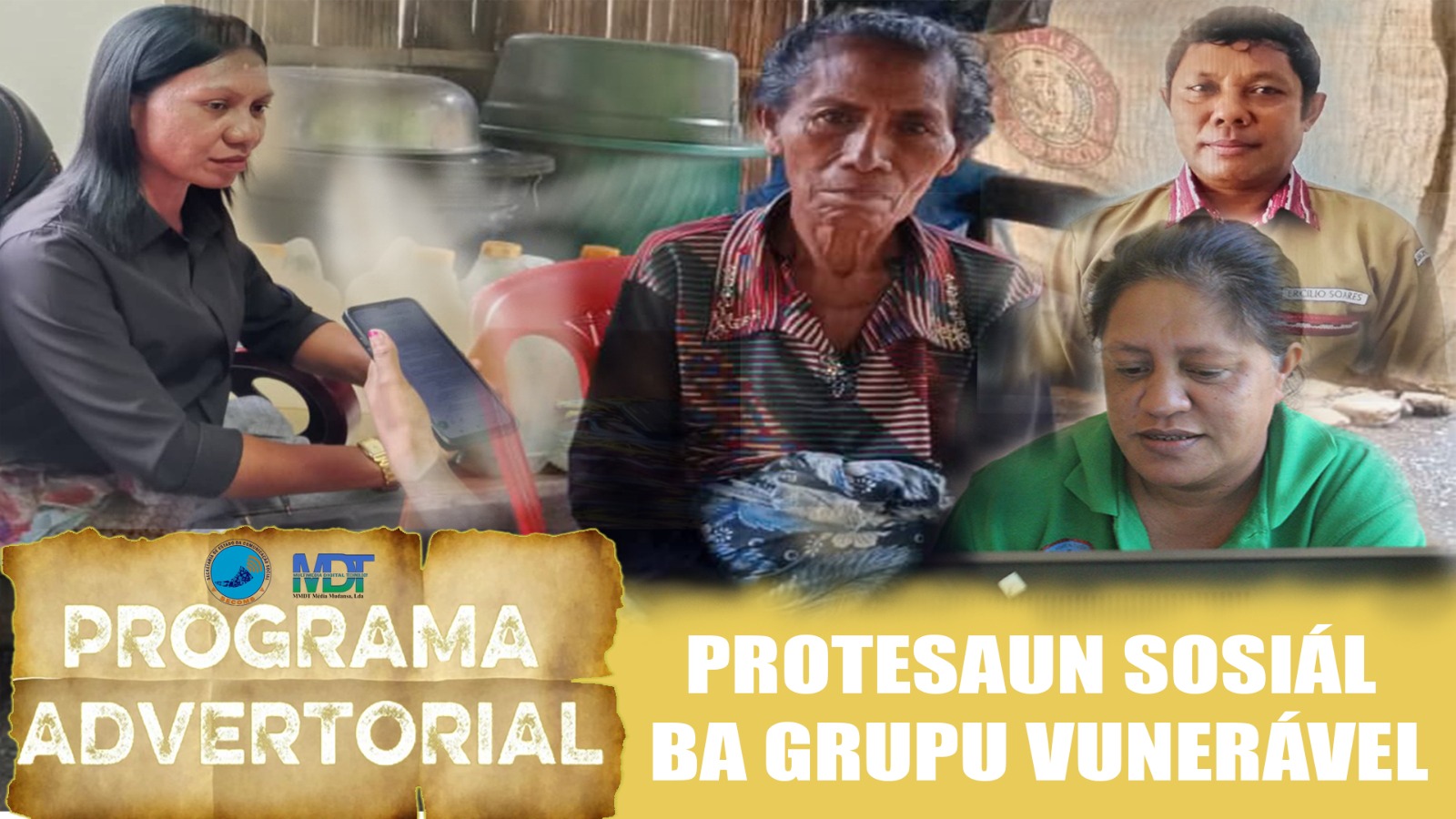
According to the elderly program beneficiary, Laurentina Amaral, she received support from the cash subsidy program (social pension) from the Ministry of Social Solidarity and Inclusion (MSSI) including humanitarian aid support for natural disasters she faced such as wind destroyed her house and these supports are very important for her daily life.
“These benefits help us to sustain our household needs,” said Beneficiary Laurentina.
He added that the money received was used to support basic needs such as food, water, and other household needs, thus, the program managed to reduce economic problems that have been burdening vulnerable families.
Laurentina also feels that positive changes have taken place because now she can receive regular support that strengthens living conditions, especially for the elderly who need more attention. This program is considered very important because it gives vulnerable communities the opportunity to live with dignity.
However, Laurentina still faces challenges, she said sometimes relevant parties visit with large transportation that is difficult to access to rural areas.
Therefore, he suggested to pay more attention to the elderly who live in rural areas and difficult access.
“The MSSI program continues to show commitment to provide support to those of us who need it most, to ensure that everyone, especially vulnerable groups, can have the opportunity to live better in the future,” said Beneficiary Laurentina.
Meanwhile, Ahic District Chief, Ersilio Soares, said, the implementation of the program by the Ministry of Social Solidarity and Inclusion (MSSI) continues to have a positive impact on the community, especially on vulnerable groups, in new data shows that there are 283 people composed of the elderly and people with disabilities who are currently supported by the government.
“The main support is in the form of social money that helps beneficiaries to meet household needs such as buying food and other basic items, this change is felt directly by the community, because they can now sustain their daily lives better, basic for citizenship, because the beneficiaries are also Timorese citizens who have the right to receive support from the State”, informs Suku Head Ersilio
He stressed, however, there are still some challenges in the implementation of the program, because there is a big problem is dealing with incomplete documents, such as BI(identity card), Electoral Card and Birth Certificate, this situation makes some people can not enter the list of beneficiaries, although they need support.
“The distribution of support must also follow the procedures and regulations established by MSSI, which sometimes create confusion or minor conflict in the community, but most communities understand that to receive support, it is necessary to follow the official way”, said the Suku Head.
He added, from the community assessment, there needs to be more efforts to improve the administrative process, especially to facilitate vulnerable people who can not walk or live far away to complete their documents. It also suggests that there should be more direct services in the communities, to ensure that everyone in need can access the program.
“With continuity and improvement, the MSSI program hopes to have a greater impact on the lives of vulnerable communities in the future,” he said.
On the other hand, Director of the Dom Bosco Oratory Youth Communication Forum Foundation (FFCJ-ODB) Domingas AF Pereira, said, today many families in Timor-Leste, especially those living in
“Because of this reality, we see that the government has a great responsibility to provide basic assistance and build a better future for people’s lives, and our mission is to defend these rights, especially for children and women, we sincerely believe, government social programs, such as subsidies for the elderly, disability support, disability support for people with disabilities as a very important security network”, argues Director of the Forum Communição Juventude Dom Bosco Oratory (FFCJ-ODB) Domingas A. F. Pereira
He asked the partnership and the Government to continue to support social programs to help and help communities’ lives, but also need to strengthen and cover all people in need while building a just and strong community.
He stressed that although the program has good intentions, but they also discovered some minor problems in the implementation of social programs, sometimes, the right people do not get help, or information about the program does not reach everywhere.
“Our role is to identify these problems and give concrete suggestions so that the government’s social program can function more effectively, reach people in need, and change their lives for the better”, said Director FFCJ.
He affirmed, based on the data that the government needs to list the names of vulnerable families well, because many people use good technology and need to avoid people who receive double or people do not deserve to receive, the head of the village and the government must make strong coordination with ministries to work together and coordinate with civil society, as well as Suku Heads at the grassroots level, making good cooperation a complex program simple.
“With these changes, social programs can become a force to build a strong and sustainable Timor-Leste, ask the government to pay attention to these suggestions to partners, think together or collaborate together is the key to real change”, Director asked
Meanwhile, Director of the National Directorate of Social Assistance (DNAS) Ministry of Social Solidarity and Inclusion (MSSI) Esperança Gonsalves, reported, each direction in its program on its part focuses on how to support vulnerable families, with three (3) priority programs such as: Mother’s Scholarship, voluntary assistance and family support.
“The mother’s scholarship program focuses on children who attend school from the age of 6 to seventeen (17) from pre-primary, pre-secondary to secondary school, and the humanitarian assistance program focuses on people in dire need of government support especially for food such as rice, beans, beans, milk, milk and other programs. for the vulnerable is a service that focuses on funeral ambulances and coffins for the dead whose vulnerable families need help,” he added.
This program has a legal basis to provide support to people with vulnerable conditions in each year and quarter, and one of the roles of social assistance is to provide support to children through the (bolsa da mãe program) including for children living with additional disabilities and the government provides a monthly subsidy to a beneficiary of eight US dollars ($8) per month for primary school children. pre-secondary will receive six US dollars ($9) per month and secondary will receive a total of ten US dollars ($10). If these children have disabilities then primary, pre-secondary and secondary schools receive an additional five US dollars ($5) per month, and perhaps this program is the draft law to encash more children who enter the Bolsa da mãe.
“MSSI is proud of its achievements during the year, an example is the amendment to decree law no.18/2012, April 4 that created the Conditional Mother’s Scholarship to increase the budget amount for beneficiaries by $8 per month for each student from the first and second cycle, $9 for each student from the third cycle, and $10 for each student from the third cycle. secondary, and if the student has a disability will get another $5,” he stressed
He added that the government’s efforts to implement pre-school children will also receive from the mother’s scholarship program, but still give priority to families who are more vulnerable such as unemployed parents and children with more than three (3) or more means they are vulnerable, while social services plan to support services and assistance to prepare beneficiaries.
“We can only provide assistance if vulnerable families need assistance and the Ministry works with local authorities to identify its communities to provide support,” he said.
He informed, children with disabilities need wheelchairs and social services continue to support while the Ministry of Social Solidarity and Inclusion (MSSI) continues to provide services to families based on the budget that is approved each year and next year will continue to prioritize support for vulnerable families.
“MSSI’s work with local authorities to identify citizens’ data in villages and sukus, because the right data comes from local authorities and families who are most vulnerable, they have not received any support so the ministry’s role is to continue to seek to obtain these data, if not supported, next year will have the opportunity again”, he concluded
According to data on vulnerable people released by the Ministry of Social Solidarity and Inclusion (MSSI) starting from 2021-2022 in the whole territory of Timor amounted to 34.48.3% of the population in multidimensional poverty and 26.8% of the population classified as vulnerable to poverty.
The National Directorate of Social Assistance, through its three departments, during 2025, will continue to provide support to vulnerable families throughout the territory of Timor-Leste.
Programs implemented include:
The Bolsa da Mãe – Education Program, which supports 74,648 beneficiaries/students throughout the territory.
Humanitarian Assistance Support, for vulnerable families who receive food and non-food support, with a total of 17,976 beneficiaries.
Funeral support for vulnerable families, with a total of 1,015 families, and also support for the transfer of bodies from abroad to Timor-Leste for five people.
This information reflects the commitment of the National Directorate of Social Assistance to continue to provide social protection to vulnerable groups, to improve their welfare and living conditions.
Related to the Program implemented in Timor-Leste showed significant progress in the area of social protection, which is aligned with the principles and standards promoted by ASEAN on inclusive development and social security for citizens, through initiatives such as strengthening primary health services, assistance to vulnerable groups, and emergency response mechanisms, showing that Timor-Leste is not a country not only adapt to regional standards, but also have the capacity to implement a resilient and sustainable social system, on this basis, the ongoing programs are an important indicator that Timor-Leste is ready to become a full member of ASEAN with a strong social protection system compatible with regional practice.